
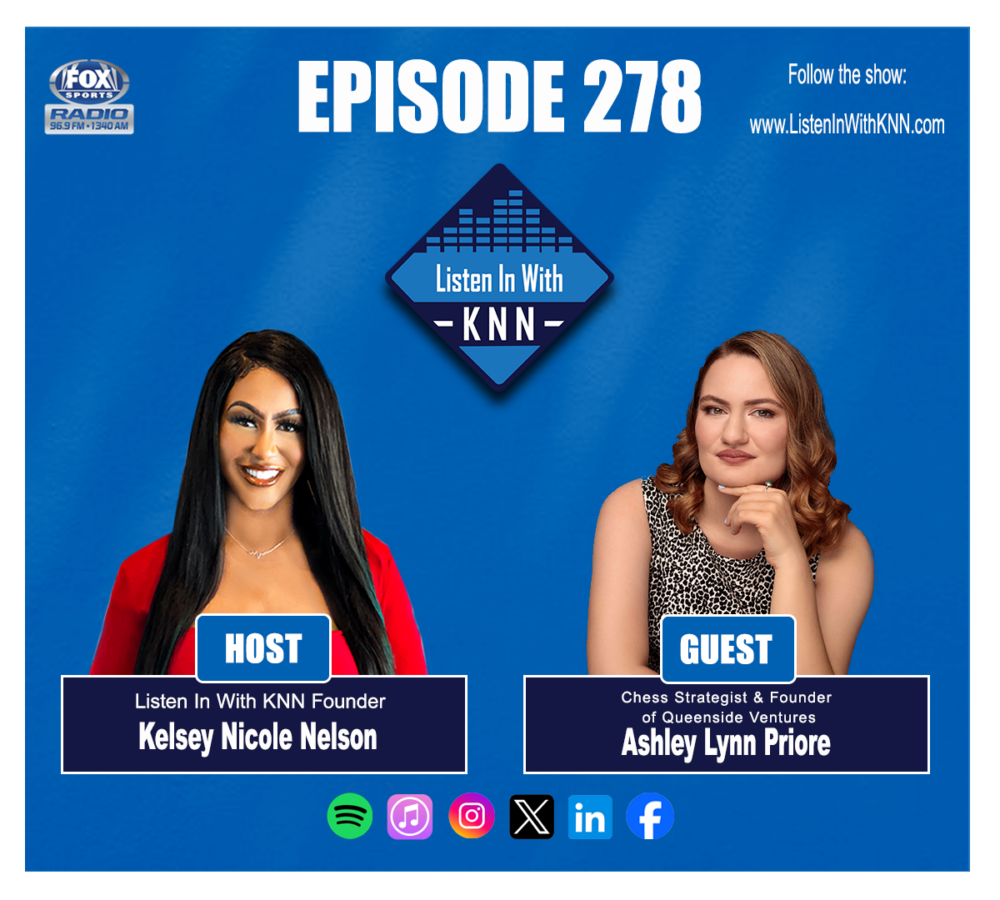
Chess has been around for over 1,500 years and has stood the test of time. But one player, Ashley Lynn Priore, is helping modernize the game’s impact by using it as a tool for leadership, strategy and performance — from youth classrooms to professional sports organizations.
Priore has been playing chess since she was just four-years-old, quickly developing a passion for the game that mirrored the excitement many athletes feel stepping onto the field or court. Raised in a family where all of her siblings played, Priore became hooked on the competition, strategy and challenge that came with each match.
“I always tell people that competitive chess is just like any other sport,” Priore said. “You’re doing tournaments, you’re practicing every day, you’re really pushing because you’re competitive and you want to win.”
Beyond the thrill of competition and passion for the sport, Priore became fascinated by what chess was doing to the mind. While many people emphasize the benefit of chess making you “smarter,” she found herself questioning why that was.
“Everyone would say to me, ‘Chess helps you be smarter,’” Priore said. “I was curious with that. I was like, ‘How does it make you smarter? What’s the actual background behind that?”
That curiosity eventually helped shape Priore’s mission: using chess not only as a game, but as a tool to teach critical thinking, problem-solving and leadership. At only 14, Priore founded The Queen’s Gambit in her hometown of Pittsburgh, Pennsylvania. She was inspired to do so after she began teaching chess lessons at her local library and realized how few girls were being encouraged to play. She recalled parents assuming their son — but not their daughter — would be interested in learning the game.
“Something needs to be done,” Priore said. “We need to make sure that everyone feels empowered, and it’s not just one person’s game — anyone can sit at the board and engage.”
Today, The Queen’s Gambit serves more than 2,000 students annually through chess-based leadership programming, empowering young people to strengthen critical thinking, adaptability and decision-making skills.
After using chess to strengthen leadership, Priore knew her next move was to introduce it to sports teams. Growing up as a football fan, she saw parallels between the strategic thinking required in chess and the split-second decision-making athletes face on the field. After graduating from college, she took a chance and reached out to the Tampa Bay Buccaneers with an idea: what if chess could help athletes become stronger leaders both on and off the field? Since then, she has worked with organizations across the NFL, NBA and more.
“When we think about why an athlete should learn how to play chess. I say chess is the sport that helps teach and empower all other sports. Said Priore. “Because you’re building your mental agility, mental performance, you’re really sharpening that, [which is] just as important as the physical.”
Through sessions with players, Priore helped athletes draw parallels between the chessboard and football field — from controlling the center of the board like the line of scrimmage to thinking several moves ahead under pressure.
What started as a passion project has since evolved into a growing career. Through Queenside Ventures, Priore now works with professional sports organizations, executives, and athletes to strengthen leadership and strategic thinking through chess. Her work has also earned national recognition, including a spot on Forbes’ 30 Under 30 list.
As chess continues to grow in popularity, Priore hopes the game’s modern resurgence creates more space for women and girls to see themselves reflected in it. While online platforms, tournaments, and sports partnerships have helped fuel a broader chess boom, Priore believes one area still deserves greater visibility: women in the game.
“Women’s chess is a women’s sport,” Priore said.
From classrooms to locker rooms, Priore has helped bring chess into new spaces — but her mission remains the same: to show that anyone can sit at the board, and everyone can learn to play chess, not checkers.
